Newsletter Subscribe
Enter your email address below and subscribe to our newsletter
Enter your email address below and subscribe to our newsletter

 ByJohn A
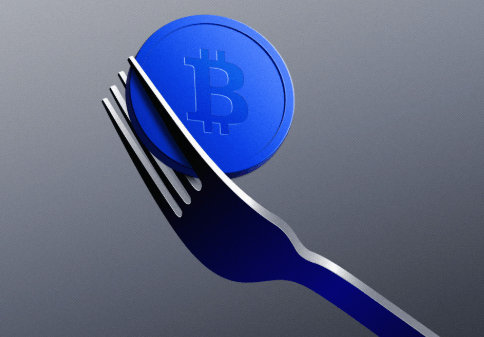
A crypto fork occurs when a blockchain splits into two paths, typically after a protocol rule change or upgrade. It can create parallel networks with different rules, influencing security, governance, and economic incentives. Hard forks introduce incompatible changes; soft forks retain compatibility. The decision process involves stakeholders, signaling how future development may unfold and who bears the risks. As users, developers, and investors weigh trade-offs, the topic remains central to the chain’s trajectory and resilience.
A crypto fork occurs when a blockchain splits into two separate paths, typically driven by a disagreement over protocol rules or a planned upgrade. Fork governance shapes decision processes, aligning participants with shared aims and governance models.
Protocol upgrades trigger sustainability choices, resource allocation, and risk assessment. Clarity, transparency, and coordination strengthen momentum toward voluntary alignment and measured, data-driven change. Freedom-aware, industry-informed outcomes emerge.
Hard forks and soft forks represent two primary pathways for updating blockchain protocols, each with distinct implications for compatibility, security, and governance. This analysis contrasts the mechanisms, signaling, and upgrade processes, emphasizing predictable outcomes and risk management.
Unrelated topic considerations emerge when planning migrations, while audience engagement hinges on transparent rationale, concise timing, and measurable effects on network incentives and validator behavior.
The impact of a crypto fork on users, developers, and investors centers on who benefits from changes in security assumptions, transaction costs, and network effects, and how quickly those benefits materialize.
Crypto governance shapes protocol legitimacy and response paths, while token standards influence interoperability and liquidity.
For investors and developers, efficiency gains and risk reallocation drive adaptation, signaling evolving market expectations and freedom-oriented innovation.
How are forks decided and what should observers monitor next? Decisions hinge on governance processes, protocol upgrades, and stakeholder consensus signals. Fork governance combines formal voting, developer proposals, and miner or validator participation, while community signaling gauges sentiment through forums, social channels, and on-chain feedback. Observers should track transparency, dissent, timeline alignment, and readiness for migration, ensuring resilience and predictable divergence.
See also: The Future of Interactive Entertainment
Forks can alter mining rewards via fork divergence and chain reorgs, shifting incentives and fee dynamics; miners respond to updated incentives, reallocating hash power and adjusting risk, while long-term effects depend on network security and miner consensus.
Forks may alter token supply or issuance rates only if consensus changes redefine emission rules, otherwise supply remains intact; token distribution can shift via new rules, illustrating how forks influence governance, allocation, and protocol economics amid evolving market freedoms.
Forks can influence transaction fees and speed indirectly via fork mechanics and network segmentation, which may affect congestion and prioritization, though core consensus rules remain unchanged for non-affected blocks, preserving overall throughput under most scenarios.
Forks are not typically reversible once on-chain; however, chain reorganizations can affect recent blocks, effectively erasing or replacing them temporarily, while irreversible consequences persist for consensus rules and network state across participants and applications.
Fork dynamics shape governance influence by empowering stakeholder votes, while mining rewards impact incentives and issuance policy changes reallocate issuance. The changes affect transaction throughput effects, yet reversibility on chain remains limited, prompting strategic considerations for decentralized participation and freedom.
A crypto fork marks a network’s crossroads, where code and consent diverge like branches after a storm. Data forks into parallel paths, yet the tree remains rooted in its history. Hard forks blaze a new trunk; soft forks prune with gentler reform. For users, developers, and investors, outcomes hinge on governance, transparency, and risk management. In the ledger’s glow, forks illustrate evolution: a living ecosystem where consensus tools discipline change, while communities decide which path to trust.